That flat-looking outfit usually doesn’t need a full shopping reset – it just needs smarter accessories. If you’ve been wondering how to layer fashion jewellery without looking overdone, the trick is not wearing more pieces. It’s wearing them with the right spacing, shape, and balance so your look feels styled, current, and easy.
Layering jewelry works because it adds dimension fast. A plain tee, an abaya, a button-down shirt, or a simple dress can go from basic to polished in seconds when necklaces, rings, bracelets, or earrings are stacked with purpose. The good news is you do not need fine jewelry or a big budget to get the effect. Fashion jewellery is actually ideal for this because it lets you try trends, mix finishes, and build multiple looks without overspending.
How to layer fashion jewellery without overdoing it
The fastest way to get layering right is to start with one area only. Most people make the mistake of styling necklaces, wrists, fingers, and earrings all at once, then wondering why the whole look feels busy. Choose a focus point first. If your neckline is open, start there. If your sleeves are rolled and your outfit is minimal, stack the wrist. If your hands are visible and you want a cleaner outfit, build around rings.
Think of layering like styling around a hero piece. That could be a pendant necklace, a watch, a chunky ring, or statement earrings. Once you have that first piece, add smaller supporting pieces around it. This creates a clear visual order, which makes even affordable accessories look more intentional.
The easiest rule is this: mix sizes, not chaos. If every piece is chunky, the look can feel heavy. If every piece is tiny, the layers may disappear. Combining one bolder item with two or three finer styles usually looks balanced and wearable for everyday outfits.
Necklaces are the easiest place to start
If you are new to layering, begin with necklaces because the result is immediate and easy to adjust. The best stacks usually have different lengths so each piece has room to show. If necklaces sit at exactly the same point, they compete with each other and tangle more.
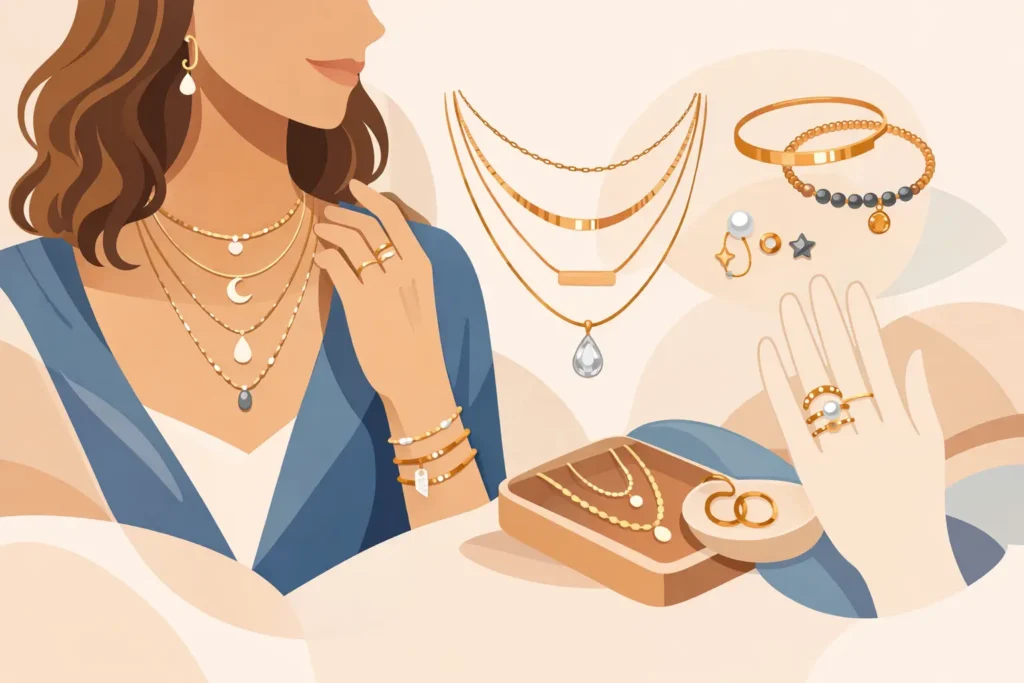
A simple formula works well: start with a short chain close to the neck, add a medium chain, then finish with a pendant or longer style. This gives the eye a natural top-to-bottom flow. If your top has a high neckline, keep the layers shorter and closer together. If you are wearing a V-neck or open collar, longer drops look more flattering.
Texture matters too. A plain chain, a coin pendant, and a slightly thicker link chain create contrast without looking random. You do not need every necklace to match perfectly. In fact, slight variation usually looks better than a too-perfect set because it feels more modern and relaxed.
If your outfit already has detail like ruffles, prints, sequins, or heavy embroidery, go lighter on the neck. Layering works best when it has space to stand out. On a very detailed outfit, one or two necklaces are often enough.
A quick necklace formula that works
For everyday wear, try one delicate chain, one small charm or pendant, and one medium-length chain with a different texture. That combination suits casual looks, office outfits, and dinner styling without feeling too much. For occasions, you can push the contrast a little more with one chunkier centerpiece, but it still helps to keep at least one piece fine so the stack has breathing room.
Bracelets and watches should feel stacked, not stuffed
Wrist layering looks stylish when it moves naturally. If your bracelets are packed so tightly that they barely sit, the stack can feel uncomfortable and messy. Leave a little room between shapes and think about sound too. Some people love a jingle; others want something quieter for work or daily errands.
A watch makes a great anchor. Add one slim bracelet on each side, or stack two to three bracelets next to it in different finishes. If the watch face is larger, keep the bracelets finer. If the watch is minimal, you can add more texture around it.
Cuffs, chain bracelets, tennis-style pieces, and beaded styles can all work together, but balance is what matters. Mixing every style you own in one wrist stack usually looks accidental. It is better to choose a lane for the day – polished, casual, edgy, or feminine – and keep the wrist stack in that mood.
If your sleeves are long and loose, a bulky wrist stack may catch and annoy you. On those days, rings or earrings might be the smarter area to layer instead.
Rings look best with variation
Ring stacking can be subtle or bold, and both can work. The difference is placement. Instead of putting large rings on every finger, spread visual weight across both hands. Maybe one statement ring on one hand, then two or three slimmer bands across the other. That keeps the look styled but still wearable.
Mixing band thickness is usually more flattering than repeating the same ring again and again. A chunky dome ring beside a thin band creates contrast. Midi rings can also help build a layered effect without making the hand look crowded.
Nail color and ring stacks affect each other more than people think. If your manicure is bright, glittery, or detailed, cleaner ring stacks often look better. If your nails are neutral, you can be a little bolder with shape and shine.
How much is too much with rings?
It depends on your outfit and your comfort. For everyday wear, three to five rings across both hands is enough for most people. For event styling or photos, you can go heavier. The goal is still balance. If your earrings and necklaces are already strong, a lighter ring stack usually keeps the full look polished.
Earrings can finish the look or compete with it
When layering earrings, especially if you have multiple piercings, size order matters. Start larger at the lobe and go smaller as you move upward. This creates a clean line and makes the ear stack look intentional.
If you are wearing bold hoops or statement drops, keep your necklaces simpler. If your earrings are tiny studs and huggies, you can do more at the neck. This is one of the biggest styling trade-offs in layered accessorizing. Not every category should be loud at the same time.
For daily wear, an easy combination is a small hoop, a huggie, and a tiny stud or cuff. It gives that styled look without trying too hard. If your hair is usually down, slightly brighter or shinier earrings help the stack stay visible.
Mixing metals can look modern when done on purpose
You do not have to stick to only gold-tone or only silver-tone pieces. Mixed metals can look current and easy, especially with fashion jewellery. The key is repetition. If you wear one silver ring with all gold pieces, it may look accidental. But if you repeat silver in your earrings or bracelet too, the mix starts to look deliberate.
A two-tone watch or a necklace with mixed details can help tie everything together. Rose gold can also work, but when you mix three finishes at once, keep the designs simpler so the overall look does not get too busy.
If you are unsure, start with one dominant metal and let the second metal appear in one or two supporting pieces. That gives variety without losing cohesion.
Match the layers to the outfit, not just the trend
One reason layered jewelry sometimes looks off is that the pieces are fighting the clothes. A sporty outfit usually suits cleaner chains, hoops, and a watch. A romantic dress works better with softer details, delicate layers, and maybe a pendant. Tailored outfits often look strongest with sharper, more structured pieces.
Necklines matter a lot here. Crewnecks, collared shirts, square necks, and strapless tops all change how necklace layers sit. The same stack can look perfect with one top and awkward with another. That is why trying jewelry on with the actual outfit matters more than copying a trend photo exactly.
This is also where affordable fashion accessories give you an advantage. You can build different layered combinations for work, weekends, gifting, and events without committing to one expensive look. For shoppers who want quick outfit upgrades at value pricing, that flexibility makes a big difference.
The small styling habits that make layers look better
Clean spacing matters. So does proportion. Before leaving the house, check whether one area is doing too much and whether another area needs less. A mirror test takes ten seconds and can save the whole look.
It also helps to remove one piece before you are fully done. If you put on four necklaces and one feels unnecessary, it probably is. Styling often looks better when it stops one step earlier than you first planned.
And if tangling drives you crazy, avoid super-fine chains at almost identical lengths. Slightly different chain weights and more space between necklace drops usually solve the problem.
At Go Factory Price, this is exactly why trend-led fashion jewellery works so well for everyday styling – you can try layered looks, switch moods fast, and keep your outfit fresh without stretching your budget.
The best layered jewelry looks are not the busiest ones. They are the ones that make your outfit feel finished, confident, and easy the moment you put them on.
Shop Related Products
-
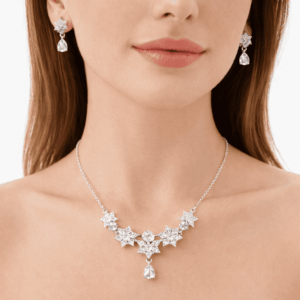
Elegant Crystal Star Necklace & Earring Set (XP010)
Original price was: 60 AED.48 AEDCurrent price is: 48 AED. -
Fashion Chrisbella Premium Quilted Backpack for Women (CB067)
Original price was: 177 AED.139 AEDCurrent price is: 139 AED. -
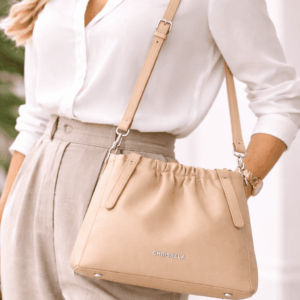
Elegant CHRISBELLA Women’s Elegant Drawstring Tote Handbag (CB073)
Original price was: 160 AED.120 AEDCurrent price is: 120 AED. -
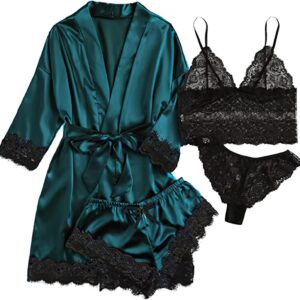
Women’s Fashion Pajama Print Sexy Lace (WU571)
Original price was: 85 AED.65 AEDCurrent price is: 65 AED.